Hacking Simulator
About the Project
Hacking Simulator is a narrative-driven hacking game where the player is a freelance hacker working for fixers in the criminal underworld. You take on contracts, map hostile networks, break into systems, exfiltrate data and cover your tracks, while every command you type raises a trace counter that can burn your identity. The tone is closer to Mr. Robot than to neon cyberpunk: tense, quiet and competent, a professional at a terminal at 3am.
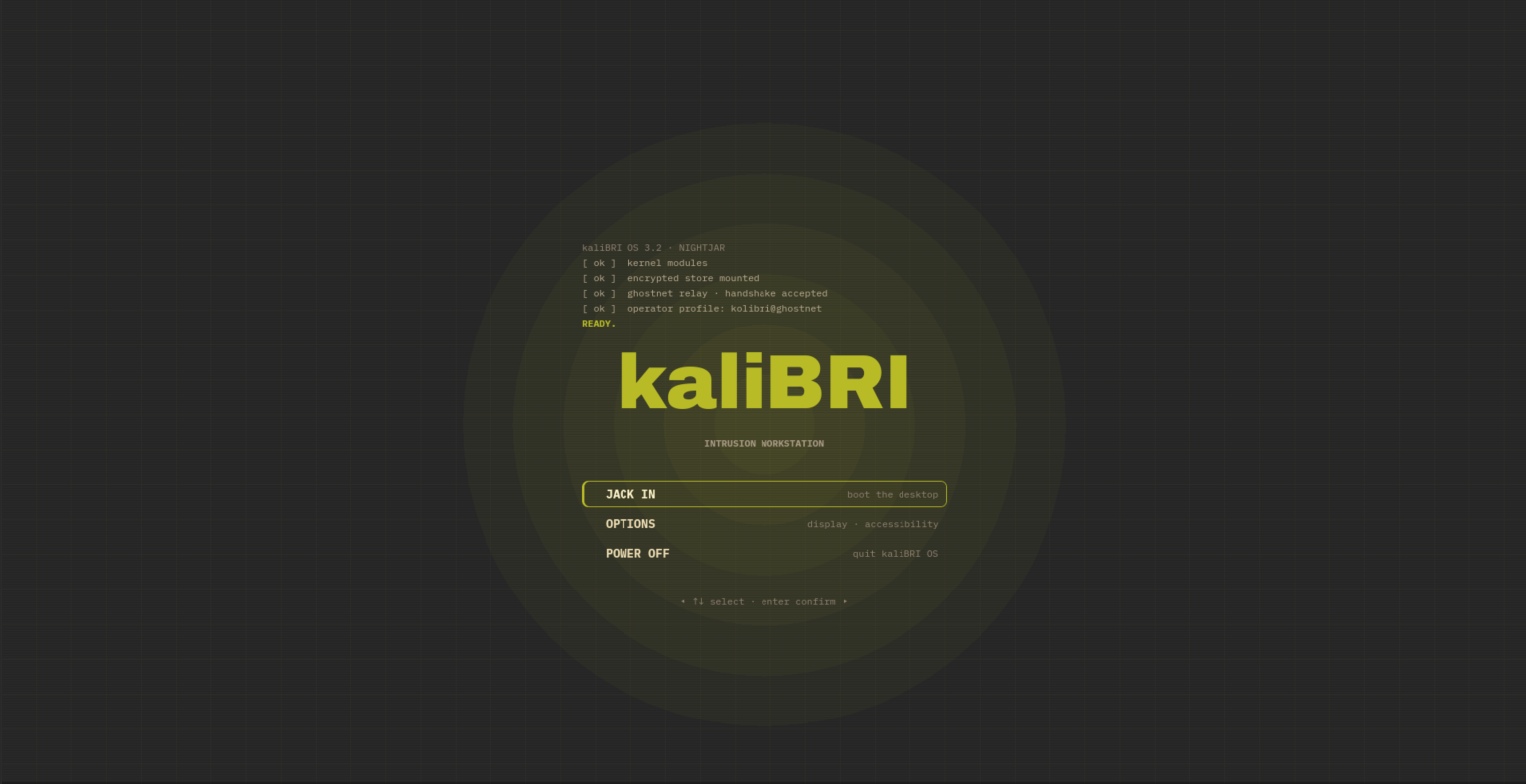
kaliBRI OS
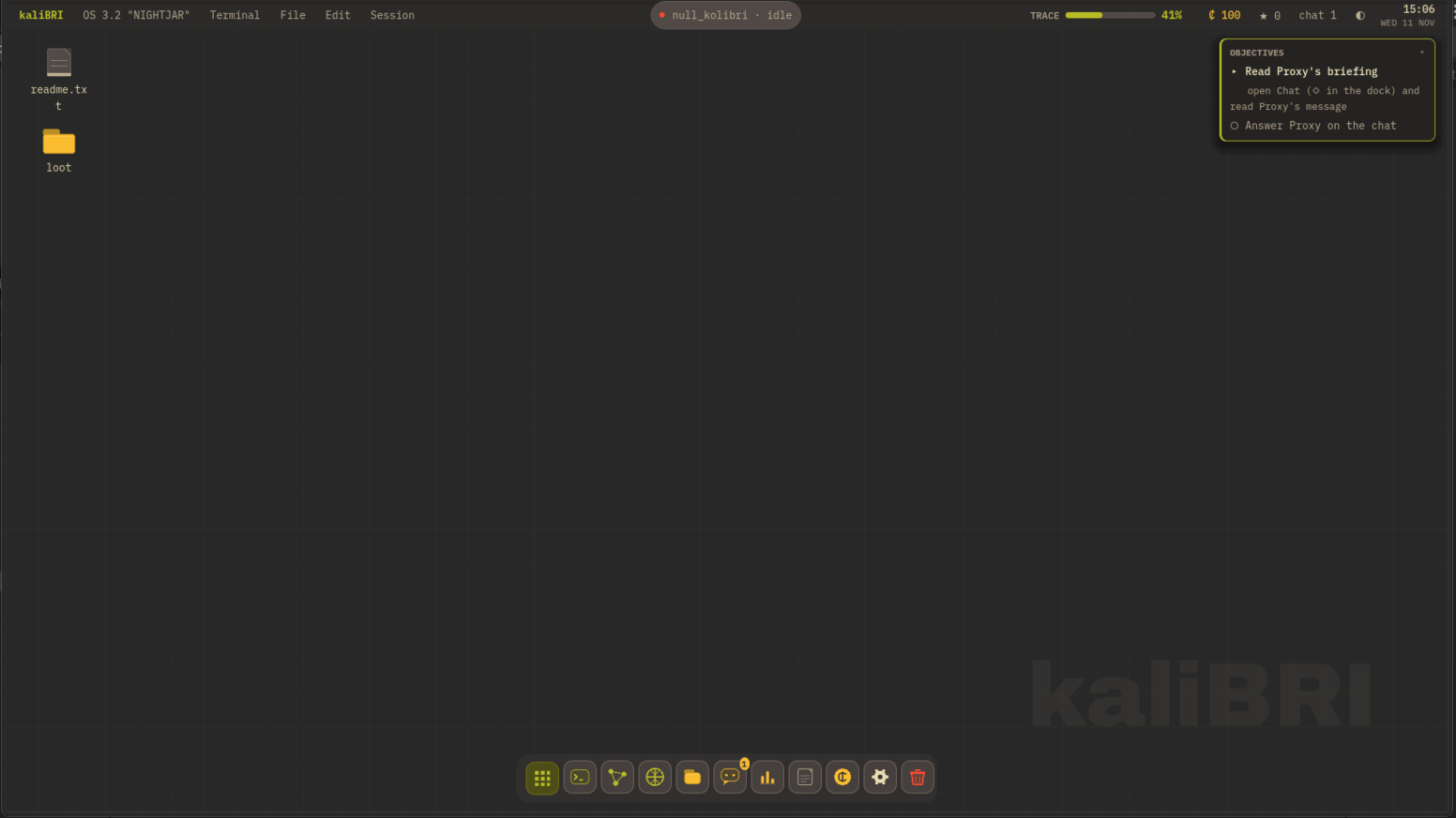
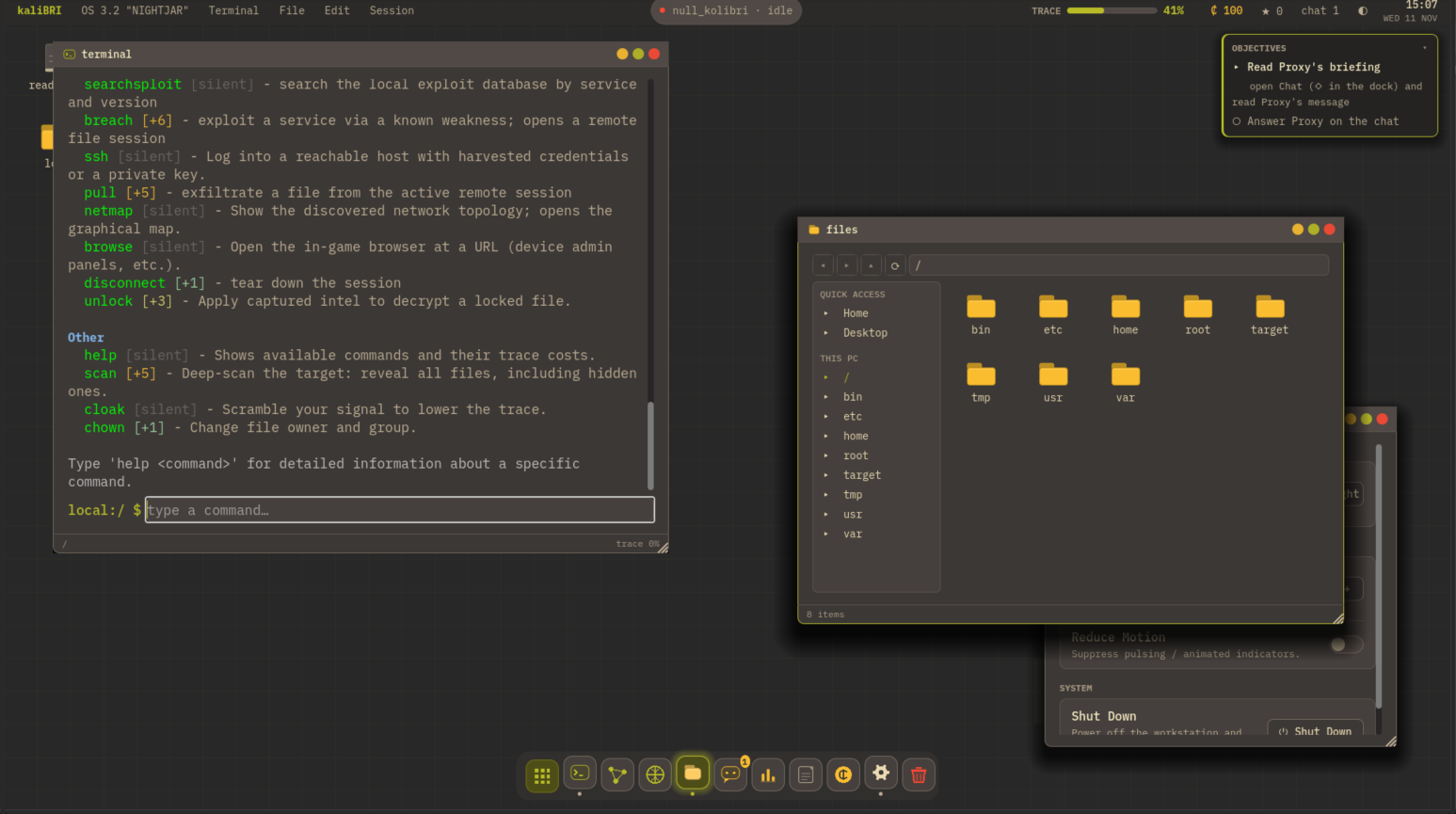
What started as a single terminal grew into a complete fictional operating system, kaliBRI OS 3.2 "Nightjar", an intrusion workstation that the player boots and operates. There is no game HUD on top of the world: the OS is the HUD. A top panel shows the trace meter, credits, session and clock; a dock launches real apps that open as floating, resizable windows: terminal, file manager, network map, an in-game web browser with developer tools, chat, process manager, notes, settings and trash. The desktop has its own files and folders, drag and drop to exfiltrate loot, notifications and an objectives tracker for the current mission.
The Game
Hacking Simulator is developed in Godot 4. Missions follow a realistic intrusion chain: scan a target with nmap,
fingerprint the service version, look up a known exploit with searchsploit, breach it to open a remote file session,
reuse harvested credentials over ssh, pivot through the network with netmap and pull the files your client wants.
Every command has a trace cost, and contextual mini-games (bruteforce, hash cracking, SQL injection, decryption, evasion and log scrubbing)
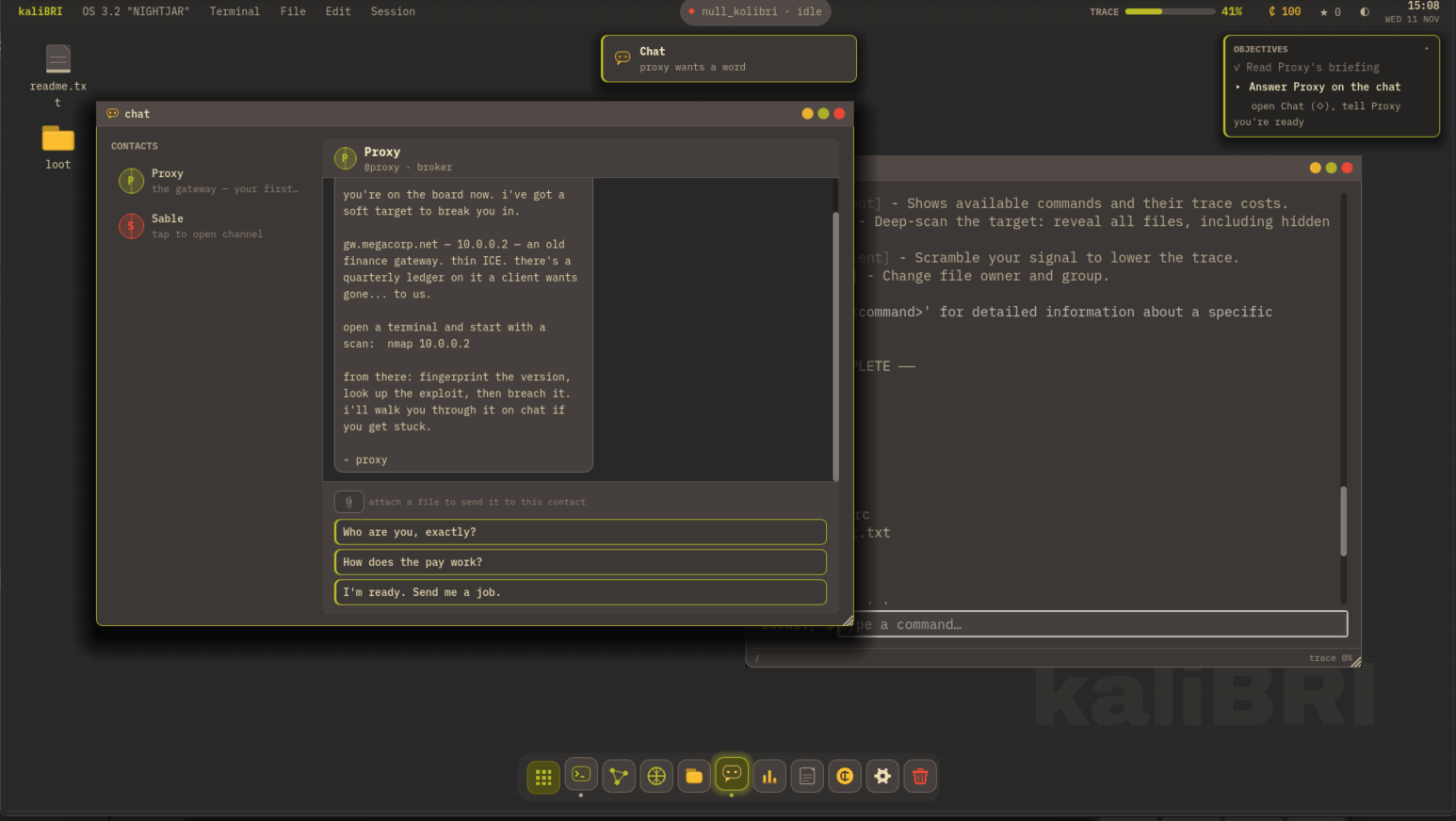
turn the key moments of a hack into hands-on challenges. Jobs come from fixers like Proxy through the chat app, across a campaign of three acts.
My Contribution
I was the lead developer and the only developer of the project. I designed and implemented the entire game in Godot, from the shell and the virtual file system to kaliBRI OS, the mini-games and the campaign.
Key Features
A Diegetic Operating System
The whole UI is kaliBRI OS: boot screen, desktop, dock, windowed apps, notifications and a Gruvbox dark and light theme.
Real Terminal
A Unix-like shell with realistic commands (nmap, searchsploit, ssh, chown, ...) and a virtual file system on every target.
Trace System
Every action has a trace cost. Let it reach the top and you face a timed evasion, or lose your identity.
Networks & Pivoting
A graphical network map, credential reuse between hosts and an in-game browser to reach firewalled admin panels.
Intrusion Mini-Games
Contextual challenges for bruteforce, hash cracking, SQL injection, decryption and covering your tracks.
Fixers & Campaign
Contracts arrive through chat from fixers, with branching replies, mission checklists and file delivery.
Gallery